Email: info@allterrainforklift.cn WhatsApp: +86 13053557263
Language:  ∷
∷ 
∷  ∷
∷ 
Time:2026-10-12 14:02:21 Read:1
A forklift hydraulic system uses pressurized fluid to power lifting, lowering, and mast-tilting functions. Understanding how forklift hydraulic systems work and how to inspect them daily helps operators identify leaks, slow lifting, and abnormal noises before they lead to more serious problems. For a rough terrain forklift operating outdoors, regular inspections should also cover hydraulic hoses, fittings, and cylinders exposed to vibration, dirt, and uneven ground.
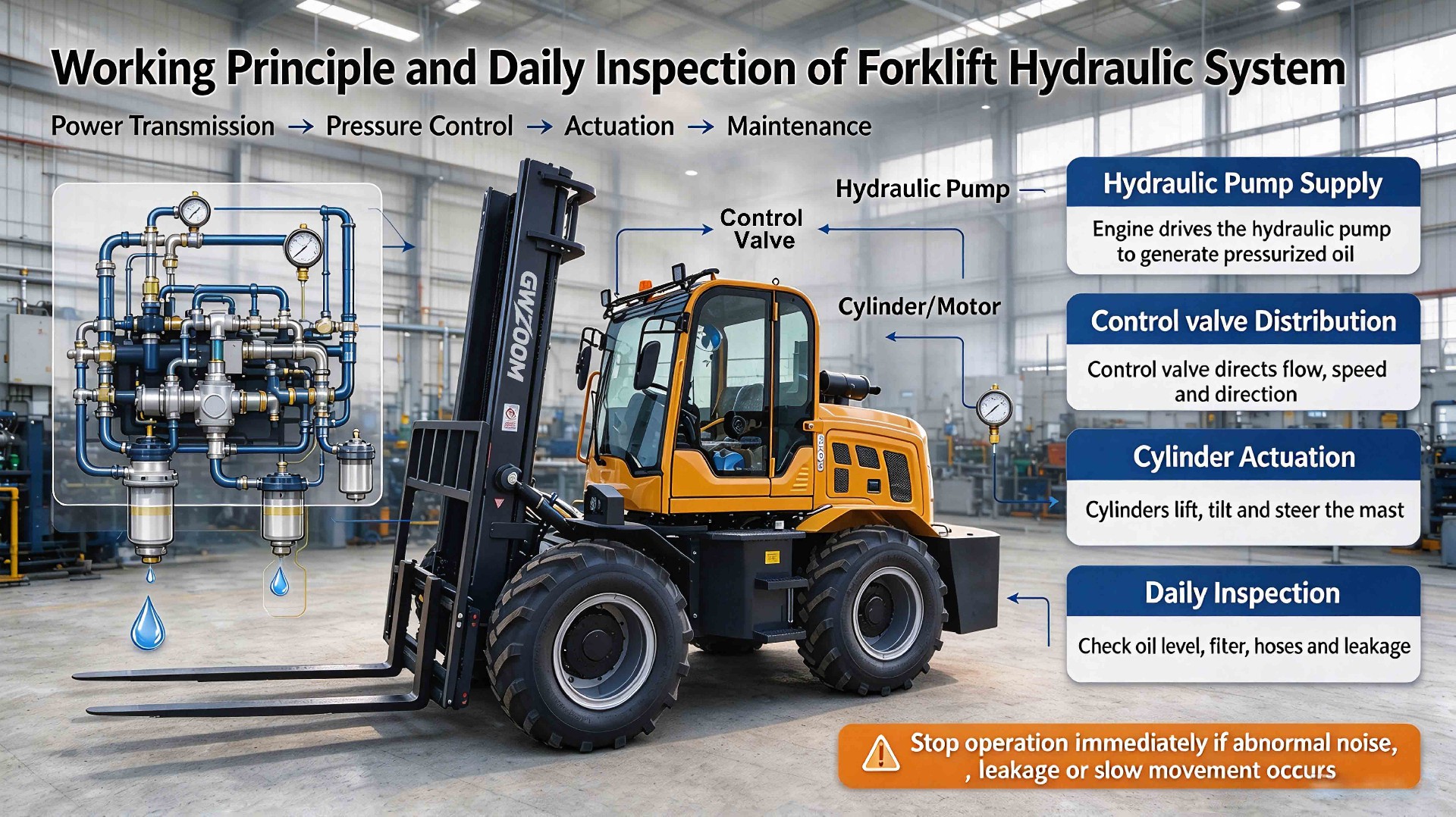
A typical forklift hydraulic system consists of a hydraulic pump, reservoir, control valves, hydraulic cylinders, hoses, and filtration components. The exact configuration varies by model.
When the power source drives the hydraulic pump, oil flows through the system. Operating a control lever or other control device changes the position of the control valve, directing oil into the appropriate cylinder. This creates the movement needed to raise or lower the forks or tilt the mast.
The condition of the hydraulic system directly affects operating performance. Low fluid levels, contaminated oil, restricted filters, or faulty components may cause slow lifting, uneven movement, or other abnormal behavior.
Check the hydraulic oil level according to the procedure specified in the operator's manual. Look for visible contamination, unusual discoloration, or other signs of deterioration.
If the oil level is low, investigate possible leaks before topping it up with the specified fluid. Using the wrong hydraulic oil or mixing incompatible fluids may affect system performance. Always follow the manufacturer's fluid specifications.
Examine hydraulic hoses, rigid pipes, fittings, and the areas around cylinders for leaks, cracks, abrasion, or deformation.
Outdoor operation can expose components to vibration, friction, mud, and impacts from uneven ground. For example, farms and outdoor material-handling sites may require forklifts to travel over changing surfaces. When evaluating a GWZOOM S-Type rough terrain forklift for compact working areas, operators should still include hydraulic hoses and connections in their routine inspection, just as they would with other forklift designs.
In a safe operating area, follow the operator's manual to check whether the forks raise, lower, and tilt smoothly. Watch for noticeable shaking, delayed movement, or unusual noise.
Slow lifting can have several possible causes, including insufficient hydraulic oil, a restricted filter, pump problems, control-valve issues, or cylinder faults. A single symptom does not necessarily identify the failed component, so further inspection may be required.
For applications involving heavier materials, buyers should consider both rated capacity and the hydraulic configuration required for the job. The GWZOOM C-Type rough terrain forklift is one option to review alongside the specific load requirements and working conditions. The final choice should always be based on the model's specifications rather than its appearance or nominal capacity alone.
During operation, pay attention to hydraulic pump noise, visible oil leakage, unstable movements, or unexpected fork lowering.
If an abnormal condition could affect safe operation, stop using the forklift and arrange a qualified inspection. Never try to compensate for a hydraulic problem by repeatedly operating the controls or unnecessarily increasing engine speed.
Hydraulic systems can retain high pressure even after the power source has been switched off. Never use your hand to locate a suspected high-pressure leak or disconnect a hose before following the manufacturer's pressure-release procedure.
Routine inspections are only part of effective maintenance. Operators should avoid overloading, use the controls correctly, and follow the manufacturer's service schedule for hydraulic oil, filters, hoses, and related components.
Forklift selection also matters. When work involves frequent lifting and maneuvering in limited space, consider the available clearance, steering layout, lifting requirements, and intended workload. A GWZOOM E-Type rough terrain forklift may be worth evaluating for suitable outdoor material-handling applications, but compatibility must be confirmed against the actual site conditions and model specifications.
Keep maintenance records that include inspection dates, operating hours, abnormal findings, and completed repairs. These records help identify recurring problems and support better preventive maintenance planning.
Before inspecting a forklift, park it on a firm, level surface, follow the shutdown procedure, and apply the required measures to prevent unintended movement. Position the forks and mast as instructed in the operator's manual. Never perform unsafe maintenance beneath a suspended load.
Hydraulic pressure may remain in the system after shutdown. Before servicing or disconnecting hydraulic components, follow the manufacturer's pressure-release and isolation procedures. Repairs involving pressurized lines, cylinders, or control valves should be handled by qualified personnel.
Q1: What does a forklift hydraulic system do?
A: It provides the hydraulic force required for functions such as fork lifting, lowering, and mast tilting, depending on the vehicle's configuration.
Q2: Why is my forklift lifting slowly?
A: Possible causes include low hydraulic oil, a restricted filter, or problems with the pump, control valve, or cylinder. Further inspection is needed to identify the cause.
Q3: How often should forklift hydraulic oil be changed?
A: Follow the manufacturer's maintenance schedule and consider the oil condition and operating environment. There is no single replacement interval suitable for every forklift.
Q4: Can I continue operating a forklift if hydraulic oil is leaking?
A: If a leak could affect system performance or safety, stop operation and arrange an inspection. Do not continue working with a potentially unsafe hydraulic fault.
Q5: Why do rough terrain forklifts need regular hydraulic hose inspections?
A: Outdoor work may expose hoses and fittings to vibration, abrasion, dirt, and impact. Regular inspections help identify damage or leakage before it develops into a more serious problem.
WhatsApp: +86 130 5355 7263
Phone:+86 130 5355 7263
Email: info@allterrainforklift.cn
Add:Shahe Town Industrial Park, Laizhou City, Shandong Province
We chat