Email: info@allterrainforklift.cn WhatsApp: +86 13053557263
Language:  ∷
∷ 
∷  ∷
∷ 
Time:2026-10-10 16:09:49 Read:1
A new forklift needs proper operation and routine inspection during its break-in period to help components adapt to working loads and reduce the risk of premature wear. What should operators know during the forklift break-in period? The key is to follow the manufacturer's instructions, avoid unnecessary heavy-duty operation, perform daily inspections, and complete the first service on schedule. For a rough terrain forklift, operators should also pay attention to tires, steering, and undercarriage conditions when working outdoors.
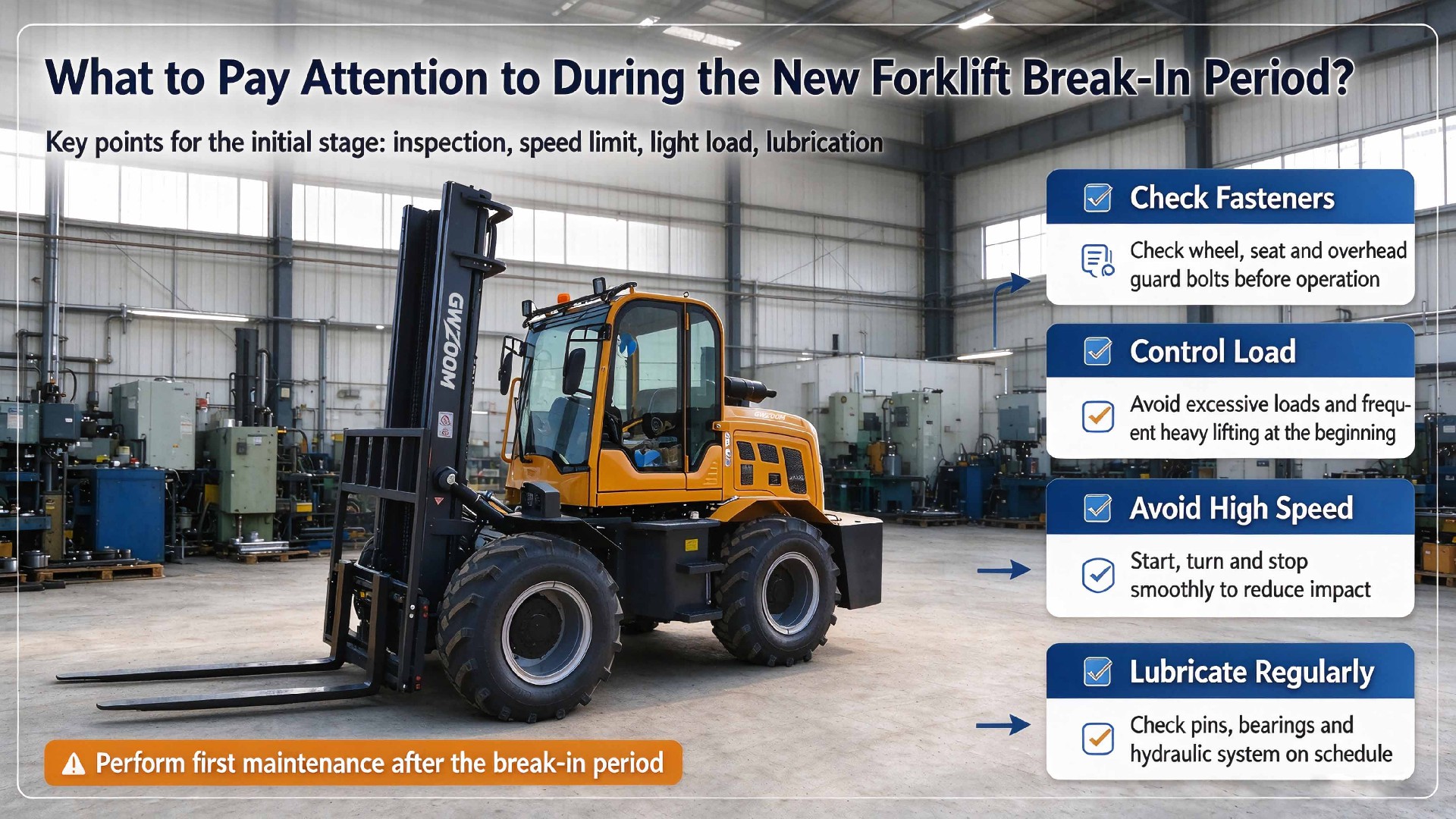
The forklift break-in period varies by model, engine, transmission, hydraulic system, and overall design. There is no single break-in duration or maintenance interval that applies to every forklift.
Before operating a new machine, read the operator's manual carefully. Confirm the recommended break-in hours, load restrictions, operating requirements, and first-service schedule instead of applying another model's guidelines.
During the initial operating stage, increase the workload gradually. Unless the manufacturer specifies otherwise, avoid prolonged full-load operation, sustained high engine speeds, and continuous intensive handling.
For construction sites and uneven outdoor surfaces, buyers can explore the F-Type front-articulated rough terrain forklift to understand its application options. Always check rated capacity, load center, and actual working conditions before selecting a machine.
Avoid sudden acceleration, harsh braking, sharp turns, and abrupt changes between forward and reverse. Keep loads stable, never exceed the rated capacity, and adjust travel speed to the ground conditions. Extra caution is necessary on slopes, loose soil, and slippery surfaces.
For outdoor material handling routes that require different steering characteristics, operators can compare the R-Type rear-articulated rough terrain forklift and follow the operating procedures specified for the selected model.
During operation, check whether lifting, lowering, tilting, and steering functions work smoothly. Unusual noise, delayed movement, excessive vibration, or visible fluid leaks should be investigated promptly. Stop the machine if a problem could affect safe operation.
For applications involving heavier materials, review the H-Type heavy-duty rough terrain forklift and confirm its rated capacity and configuration. A heavy-duty model must still operate within its specified load limits.
A daily inspection before operation helps identify potential problems early. Follow the checklist in the operator's manual, paying attention to the following items:
Fluids and leaks: Check engine oil, coolant, hydraulic oil, and other specified fluids. Look for visible leaks.
Tires and wheels: Inspect for damage, abnormal wear, loose components, and correct tire pressure where applicable.
Brakes and steering: Confirm that braking and steering functions operate normally without unusual noise or excessive play.
Forks and mast: Check the forks, chains, mast, and relevant fasteners for damage or looseness.
Safety equipment: Verify that lights, the horn, reversing alerts, and other installed safety devices work properly.
If an abnormal condition could affect safety, stop using the forklift and arrange an inspection by qualified service personnel. The exact inspection requirements depend on the model.
The first forklift service should be completed according to the manufacturer's specified operating hours or time interval. Do not rely on a universal schedule.
During the first service, check the required fluids, filters, fasteners, and system conditions. Record the operating hours and any issues found. Regular maintenance must continue after the break-in period ends.
For rough terrain forklifts working on muddy, gravel, or uneven surfaces, inspect the tires, undercarriage, and steering-related components according to the actual operating environment. Remove accumulated dirt and debris when appropriate, and check for damage.
To compare available configurations for different outdoor applications, visit the GWZOOM rough terrain forklift product range.
Q1: How long does a new forklift break-in period last?
A: It depends on the specific model and manufacturer requirements. Check the operator's manual for the recommended duration and operating limits.
Q2: Can a new forklift carry its full rated load during break-in?
A: Follow the manufacturer's break-in instructions. Avoid overloading and prolonged heavy-duty operation unless explicitly permitted.
Q3: Should a new forklift be inspected every day?
A: Operators should complete the required pre-operation inspection, including checks of fluids, tires, brakes, steering, forks, and safety equipment.
Q4: When should the first forklift service be performed?
A: Follow the manufacturer's specified operating hours or time interval, and confirm which inspection, replacement, and adjustment tasks are required.
Q5: What extra precautions apply to a rough terrain forklift during break-in?
A: In addition to routine checks, monitor tire condition, steering, and the undercarriage. Adjust speed and workload to the terrain, and avoid forcing the machine through unsuitable ground conditions.
WhatsApp: +86 130 5355 7263
Phone:+86 130 5355 7263
Email: info@allterrainforklift.cn
Add:Shahe Town Industrial Park, Laizhou City, Shandong Province
We chat